What Are the Best UV Curing Systems for Printing in China?

Time:2026-09-28 Author:Sienna
0%

Choosing Uv Curing Systems For Printing in China means matching the equipment to the job, not simply buying the most powerful lamp. A packaging press running at high speed has different needs from a label line handling heat-sensitive film. Ink chemistry, substrate, working width, press speed, and available maintenance support all affect the result. A lamp that cures well on coated paper may leave tacky ink on plastic. Small production tests matter.

A useful selection principle is: “Match the curing system to the ink, substrate, and press conditions—not to headline power alone.” This is an editorial summary of practical UV-curing guidance, not a verified quotation from a named expert. A publication-ready expert quotation should be checked against its original source; attaching unsourced words to a real specialist would weaken trust.

This guide compares mercury-vapor and UV LED systems, then examines curing performance, energy use, integration, and service access. Look for concrete evidence: measured line speed, adhesion results, temperature readings, and consistent cure across the print width. Ask suppliers to demonstrate the system using your ink and substrate. A bright lamp is not proof of a complete cure. Neither is a polished brochure.

China’s market includes local manufacturers and international suppliers, but brand origin alone cannot establish suitability. Specifications can also hide practical limitations. The best choice is the system that reliably meets your print requirements, fits your press, and can be supported over time. Some details may still need testing on your own line. That is worth admitting.
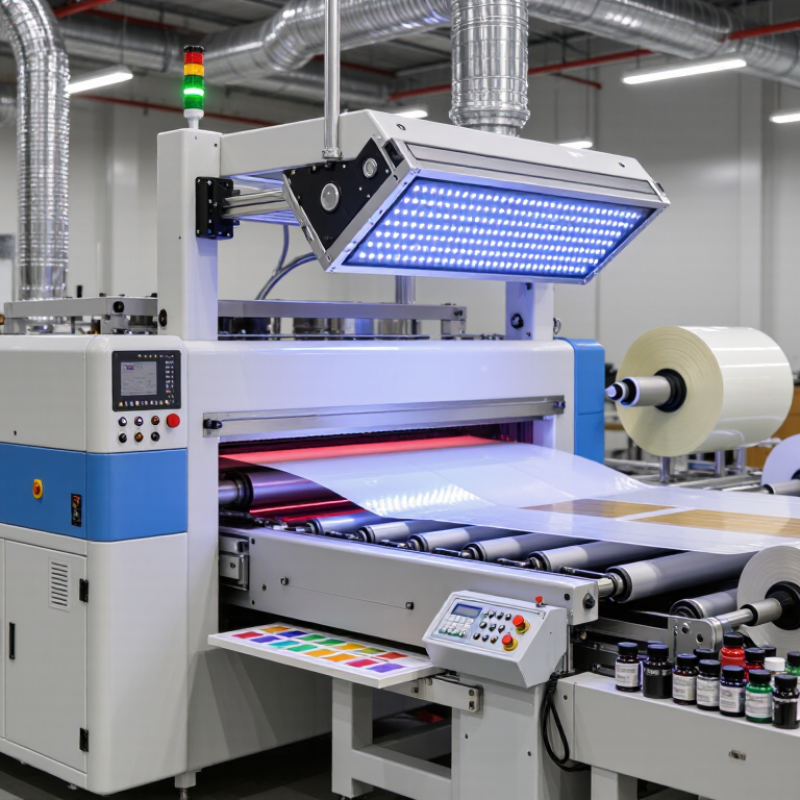
What Are the Best UV Curing Systems for Printing in China?

How UV Curing Systems Work in Printing

In a printing line, a UV curing system exposes freshly printed ink or coating to ultraviolet energy. The ink contains photoinitiators that absorb this energy and trigger a rapid chemical reaction. As the material’s molecules link together, the wet layer hardens. The process can take seconds. A lamp or LED array, reflectors, power controls, cooling, and shielding work together to deliver the exposure.

The result depends on more than lamp power. Wavelength, energy dose, ink chemistry, print thickness, and conveyor speed all matter. If a sheet moves too quickly, the ink may remain soft beneath its surface. A glossy finish can fool the eye. Check adhesion and rub resistance, not appearance alone. A small test print can reveal problems before a full production run.

Operators typically adjust the curing settings for the substrate and ink, then inspect samples under consistent conditions. Paper, film, and heat-sensitive materials may respond differently, so excessive heat or exposure can cause issues. UV systems also need suitable shielding and maintained safety interlocks to limit exposure. There is no single setting for every job. In practice, even careful adjustments sometimes need another test.

Common UV LED curing systems use nominal wavelengths such as 365, 385, and 395 nm. Photon energy is calculated from each wavelength using E = hc/λ; it does not by itself indicate curing speed or performance, which also depend on ink chemistry, irradiance, and exposure time.

Main Types of UV Curing Systems Used in China

Across China’s printing sector, three UV curing types are commonly considered: mercury-vapor lamps, UV LED systems, and hybrid setups. Mercury lamps produce broad-spectrum ultraviolet output and can cure many conventional UV inks at high production speeds. They suit established presses, but generate substantial heat and often require cooling and regular lamp replacement. Watch the sheet edges. Uneven exposure can leave ink tacky, especially on dense coverage.

UV LED systems use specific wavelengths, commonly around 365 to 405 nanometers, matched to compatible inks and coatings. They switch on quickly, produce less infrared heat, and can help printers handle heat-sensitive films or thin sheets. The fit matters. An LED unit cannot reliably cure every ink, so operators should check wavelength compatibility and run adhesion tests before changing production settings. Results may vary across colors and coating thicknesses.

Hybrid systems combine LED modules with mercury lamps, giving a press more curing options across different jobs. They can be useful where a shop prints on both paper and plastic, though installation and maintenance become more involved. In practice, compare curing speed, substrate temperature, ink requirements, and available space around the press. A small test run often reveals problems that a specification sheet misses. It is not a perfect shortcut.

What Are the Best UV Curing Systems for Printing in China? — Main Types of UV Curing Systems Used in China

System Type How It Cures Common Printing Applications Main Advantages Key Considerations Best Fit
Mercury-vapor arc UV A mercury lamp produces broad-spectrum UV output, typically covering parts of the approximately 200–400 nm range. Offset, flexographic, screen, and some specialty printing; labels, cartons, and other UV-coated or UV-inked products. Broad output can cure many established UV ink and coating formulations; widely understood in conventional printing workflows. Generates substantial heat; lamps and reflectors require maintenance and eventual replacement. Ozone may be produced by certain lamp configurations, so suitable extraction may be required. Existing presses and applications using inks or coatings formulated for conventional arc lamps.
UV LED curing Semiconductor diodes emit narrow-band UV, commonly at nominal wavelengths such as 365, 385, 395, or 405 nm. Label and narrow-web printing, flexography, screen printing, digital inkjet, and selected offset or coating applications. Lower radiant heat at the substrate than many arc-lamp systems; instant on/off operation and no mercury lamp to replace. Output is wavelength-specific. Ink and coating photoinitiators must match the LED emission; equipment and process settings must be validated for the job. New or upgraded production lines seeking energy-efficient curing, reduced heat exposure, or frequent start-stop operation.
Hybrid arc and LED system Combines a conventional broad-spectrum UV lamp with one or more wavelength-specific LED curing units. Presses running a mix of conventional UV and LED-compatible inks or coatings, including jobs with different curing requirements. Offers process flexibility and can support a gradual transition to LED curing without changing every application at once. Requires careful matching of each ink or coating to the curing source; adds equipment and control complexity compared with a single-source setup. Printers with varied job types or a phased modernization plan.
Microwave-powered UV arc system Microwave energy excites a UV-emitting lamp without conventional electrodes; the lamp produces broad-spectrum UV output. High-throughput web, flexographic, screen, and coating lines where continuous operation is important. Electrode-free lamp design can reduce electrode-related wear; broad output suits many compatible UV-curing formulations. Still produces heat and requires appropriate shielding, cooling, and maintenance. Compatibility depends on the lamp spectrum and the ink or coating formulation. Continuous production lines with established broad-spectrum UV processes.
LED pinning followed by final UV curing A lower-dose LED exposure partially sets or “pins” ink drops; a later curing stage completes the cure. Digital inkjet printing, especially applications requiring control of dot spread, fine detail, or overprinting. Can improve ink placement and edge definition before final curing, supporting more controlled print appearance. Pinning dose, wavelength, ink chemistry, and final-cure conditions must be tuned together; pinning alone does not necessarily fully cure the ink. Inkjet workflows where print sharpness and controlled ink spreading are priorities.

Selection note: “Best” depends on the press, substrate, ink or coating chemistry, production speed, heat sensitivity, and maintenance requirements. Confirm spectral compatibility and curing performance with the ink supplier and through production trials; lamp power alone does not establish cure quality.

Key Performance Factors for Comparing UV Printers’ Curing Systems

When comparing UV curing systems, measure irradiance at the printed surface, not only at the lamp window. Record irradiance in W/cm² and delivered dose in mJ/cm². Distance, reflector condition, and conveyor speed can change exposure. The lamp’s wavelength range must also suit the ink’s photoinitiator; a bright surface can still hide under-cured ink beneath it. Test at production speed, including dense fills, fine text, white ink, and layered prints. Check tack and rub resistance after cooling. Small details matter.

Use repeatable benchmarks. ASTM D3359 grades coating adhesion from 0B to 5B; 5B indicates no coating removal in the test area. ISO 2813 measures gloss at 20°, 60°, or 85°, helping compare finishes consistently. These standards do not prove complete curing, so pair them with dose records and an appropriate cure or solvent-resistance test. Keep the substrate, ink batch, and test conditions consistent. Still, one clean sample proves little. I would compare several runs, then note failures as well as successes; real production is less tidy than a demo.

Printing Applications and Substrate Requirements

In China’s print shops, the right UV curing system depends on the job, not just press speed. A carton line may need strong curing across a wide sheet, while a label press must hold fine details at higher speeds. There is no perfect setup. That is easy to forget when comparing equipment specifications.

Substrates behave differently under UV exposure. Uncoated paper absorbs ink, while coated board can leave it sitting near the surface. Plastic films may distort with excess heat, and glass or metal often need careful surface preparation. Check ink adhesion with a tape test after curing. Also match the lamp’s wavelength to the ink’s photoinitiators; a bright lamp alone proves little. Small test runs help reveal pinholes, smudging, or poor rub resistance before full production.

Measure curing at the actual working distance and line speed. A thick layer of white ink may need more energy than a thin process-color layer. LED systems can limit heat on sensitive films, but their output must suit the ink and press configuration. Conventional UV lamps may fit certain existing lines, though ventilation and heat management need attention. Real production is messier than a datasheet. A slightly slower pass can sometimes deliver more reliable adhesion than chasing maximum speed.

How to Choose a UV Curing System for a Printing Business in China

Choosing a UV curing system starts with the print jobs you run most often. A label shop handling thin film needs different heat control from a carton printer using coated board. List your substrates, ink types, maximum web width, and target line speed before comparing equipment. Details matter.

LED UV systems can reduce heat exposure and may suit heat-sensitive materials. They need compatible inks and careful assessment of wavelength and output. Conventional UV lamps can serve varied applications, but may add heat and require more frequent lamp changes. Ask for measured curing data at your actual production speed, not just a rated maximum.

Run a press trial with your own ink and substrate. Check adhesion, rub resistance, and whether the print feels fully cured after cooling. Watch for warping, odor, or uneven results near the edges. These signs can point to poor lamp positioning or insufficient dose. A sample sheet is useful, but a short production run tells you more.

For a printing business in China, also check installation access, spare-part availability, and technician response times in your region. Compare energy use, extraction needs, maintenance intervals, and integration with existing presses. I would not treat a supplier’s test sheet as the whole answer; real jobs can behave differently. One setup rarely fits every shop.

FAQS

What are the main types of UV curing systems used in printing?

Mercury-vapor lamps, UV LED systems, and hybrid setups are common options.

What are the advantages and drawbacks of mercury lamps?

They cure many conventional UV inks at high production speeds. They also generate substantial heat and need cooling and regular replacement.

When might a UV LED system be useful?

LEDs switch on quickly and produce less infrared heat. They can suit thin sheets or heat-sensitive films. Check ink compatibility first.

Can one LED system cure every ink?

No. Match its wavelength, often around 365 to 405 nanometers, to the ink. Run adhesion tests before changing production settings.

What should printers test during a production run?

Measure irradiance at the printed surface and record delivered dose. Test dense fills, fine text, white ink, and layered prints at production speed.

Why can a bright print still be under-cured?

The ink’s photoinitiator may not match the lamp’s wavelength. Ink beneath the surface may remain under-cured. Brightness alone proves little.

What do adhesion and gloss tests tell operators?

ASTM D3359 rates coating adhesion from 0B to 5B. ISO 2813 compares gloss at 20°, 60°, or 85°. Neither proves complete curing.

How can printers compare systems fairly?

Keep the substrate, ink batch, and test conditions consistent. Check tack and rub resistance after cooling. One clean sample is not enough. Compare several runs, including the messy ones.

Conclusion

Uv Curing Systems For Printing use ultraviolet energy to cure inks, coatings, or adhesives soon after they are applied, helping printed materials become dry and ready for the next production step. Printing businesses in China can choose among different system types, including conventional UV lamps and LED-based systems. Each option differs in energy use, heat output, curing speed, maintenance needs, and compatibility with printing equipment.

Choosing a suitable system depends on more than curing speed. Businesses should consider print quality, production volume, operating costs, and the substrates they use, since paper, plastics, films, and other materials respond differently to heat and UV exposure. By comparing performance requirements with application needs and available equipment, a printing business can select a curing solution that supports consistent results and efficient production.

Sienna

Sienna

Sienna is a skilled marketing professional with a deep expertise in our company’s core products and services. With a passion for innovation and detail, she plays a pivotal role in crafting insightful blog posts that not only highlight the unique features of our offerings but also provide valuable......